A walking guide

What to see in Erice.

The historic town is a triangle, less than a kilometre on each side. You can walk every monument here in a single afternoon — and you should.

Erice rewards slow walking. These are the eight places you shouldn't miss — castles, churches, walls, and the quiet corners that locals love most. We've ordered them as a natural loop, beginning at Porta Trapani (where the cable car arrives) and ending at the summit.

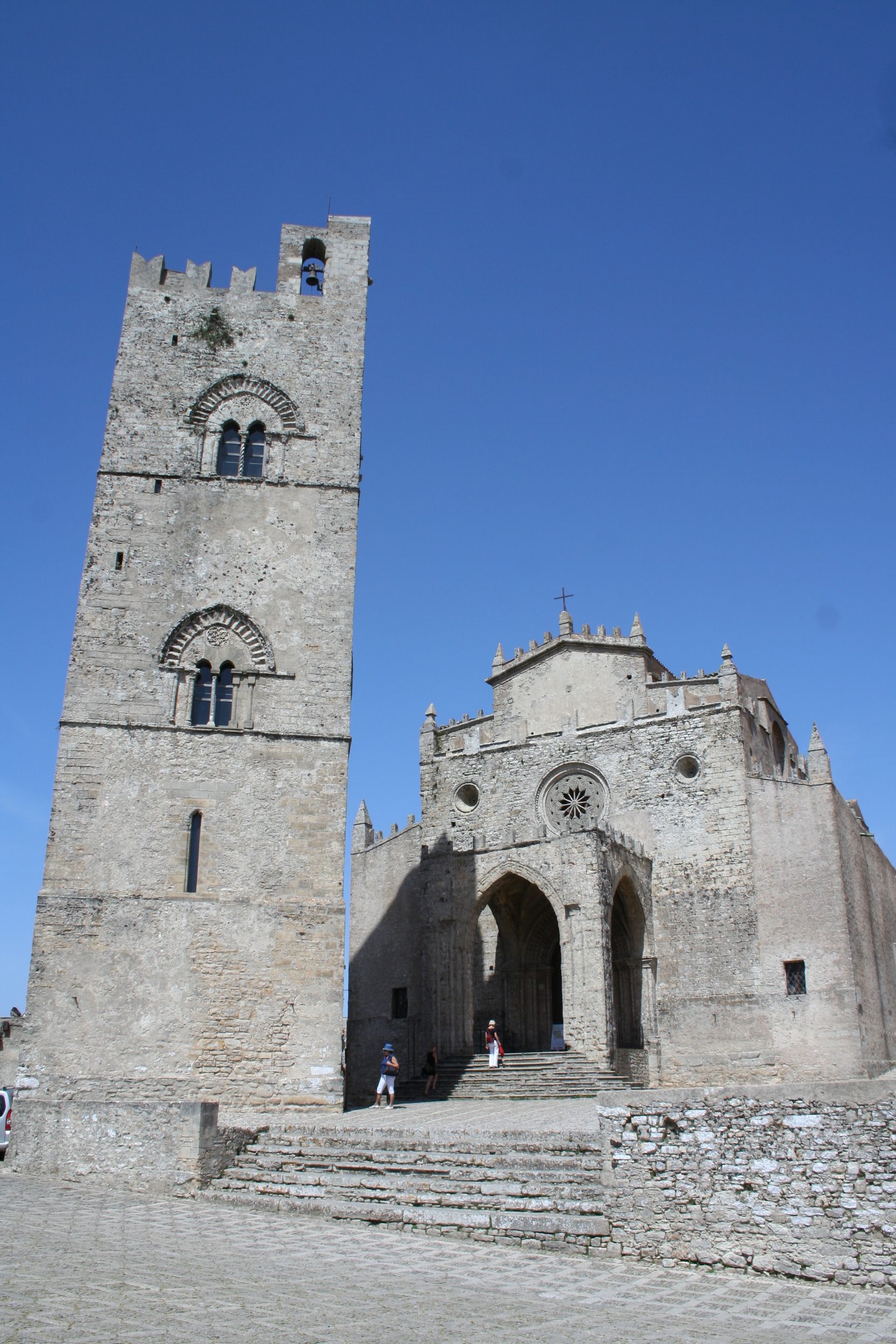
The Gothic portal and freestanding bell tower of the Chiesa Matrice in Erice.

No. 01

Chiesa Matrice (Real Duomo)

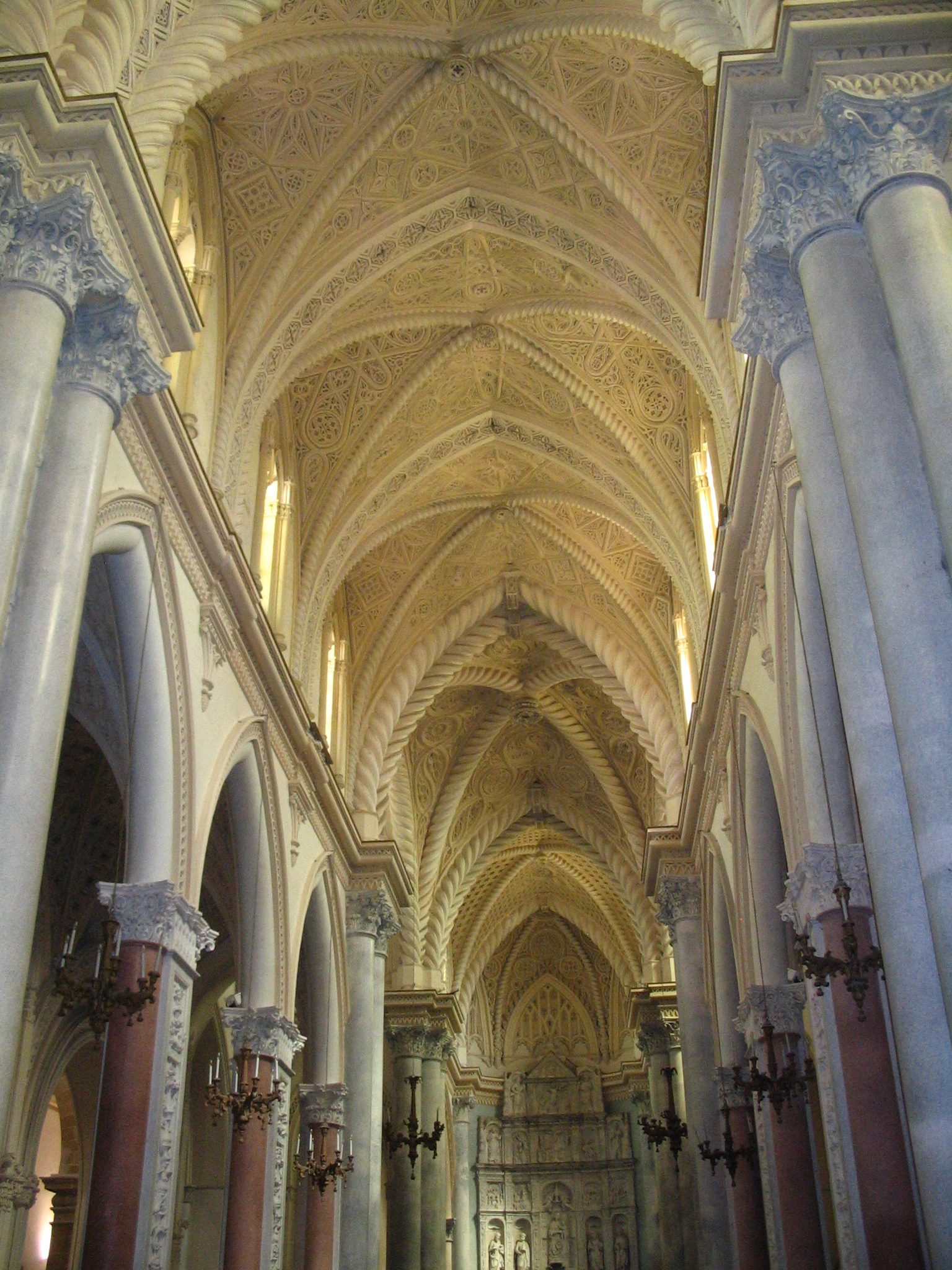
Erice's mother church, begun in 1314 under Frederick III of Aragon and built — by tradition — with stones taken from the ancient temple of Venus. The exterior is austere Sicilian Gothic; the interior, white and luminous, was rebuilt in neo-Gothic in the 19th century. Look up for the stone "lacework" of the ceiling.

The free-standing bell tower stands on what is probably a Punic-era watchtower. 108 steps will take you to the top, and a 360° view from there.

Built: 14th century Where: Just inside Porta Trapani Climb: 108 steps
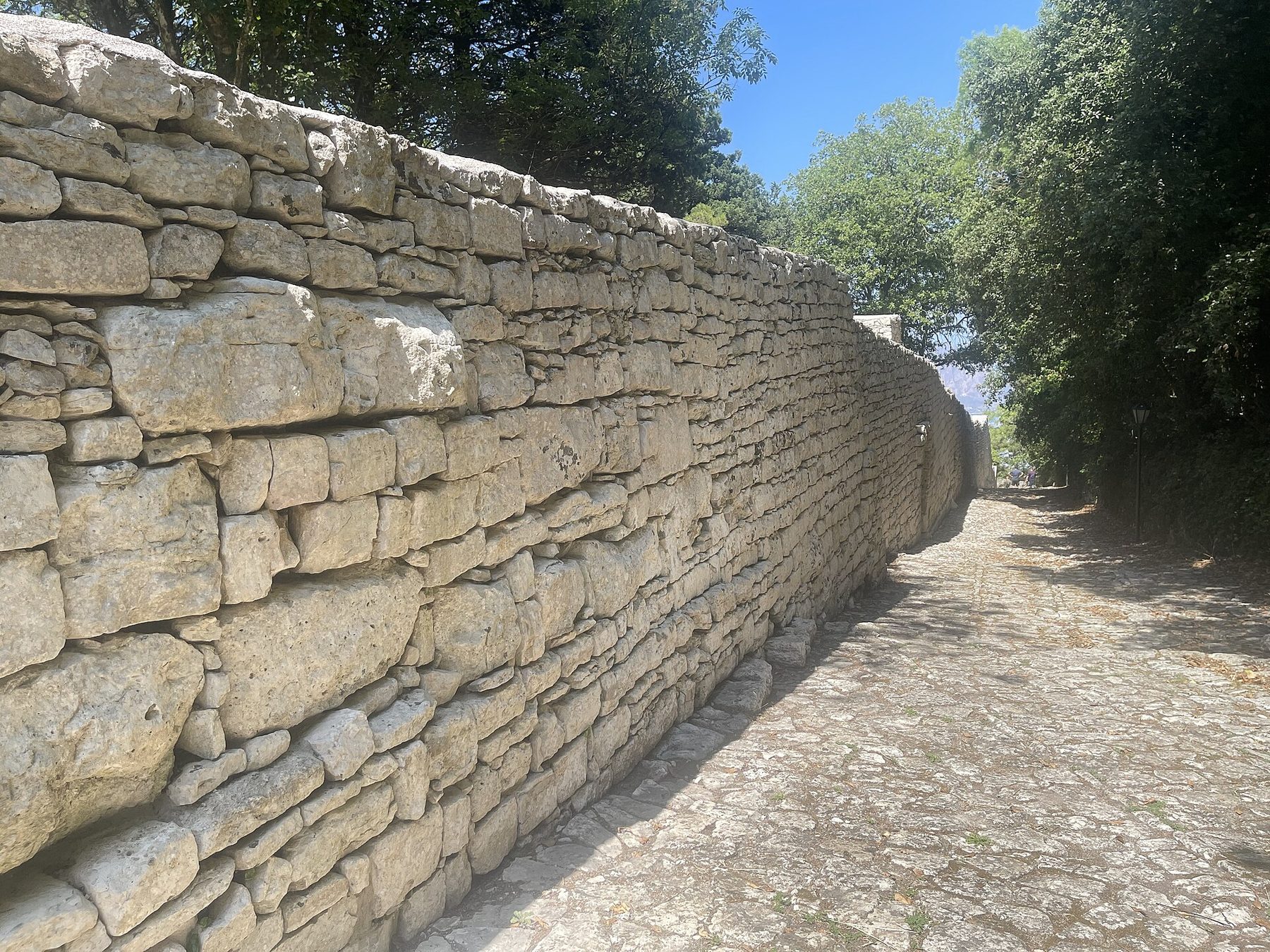
The Elymian-Punic walls of Erice running along the eastern edge of the town.

No. 02

Mura Elimo-Puniche & Porta Spada

The eastern walls are the oldest thing in Erice. Their lower courses — colossal, irregular blocks — were laid by the Elymians in the 8th century BC and reinforced by the Phoenicians in the 5th. The upper courses are medieval. The Porta Spada gate punctuates the line.

Walking the wall path at the edge of town is one of the quietest experiences in Sicily. The wall on one side, a steep drop to the Sicilian countryside on the other.

Era: 8th–5th century BC Where: Eastern side, near Porta Spada Free
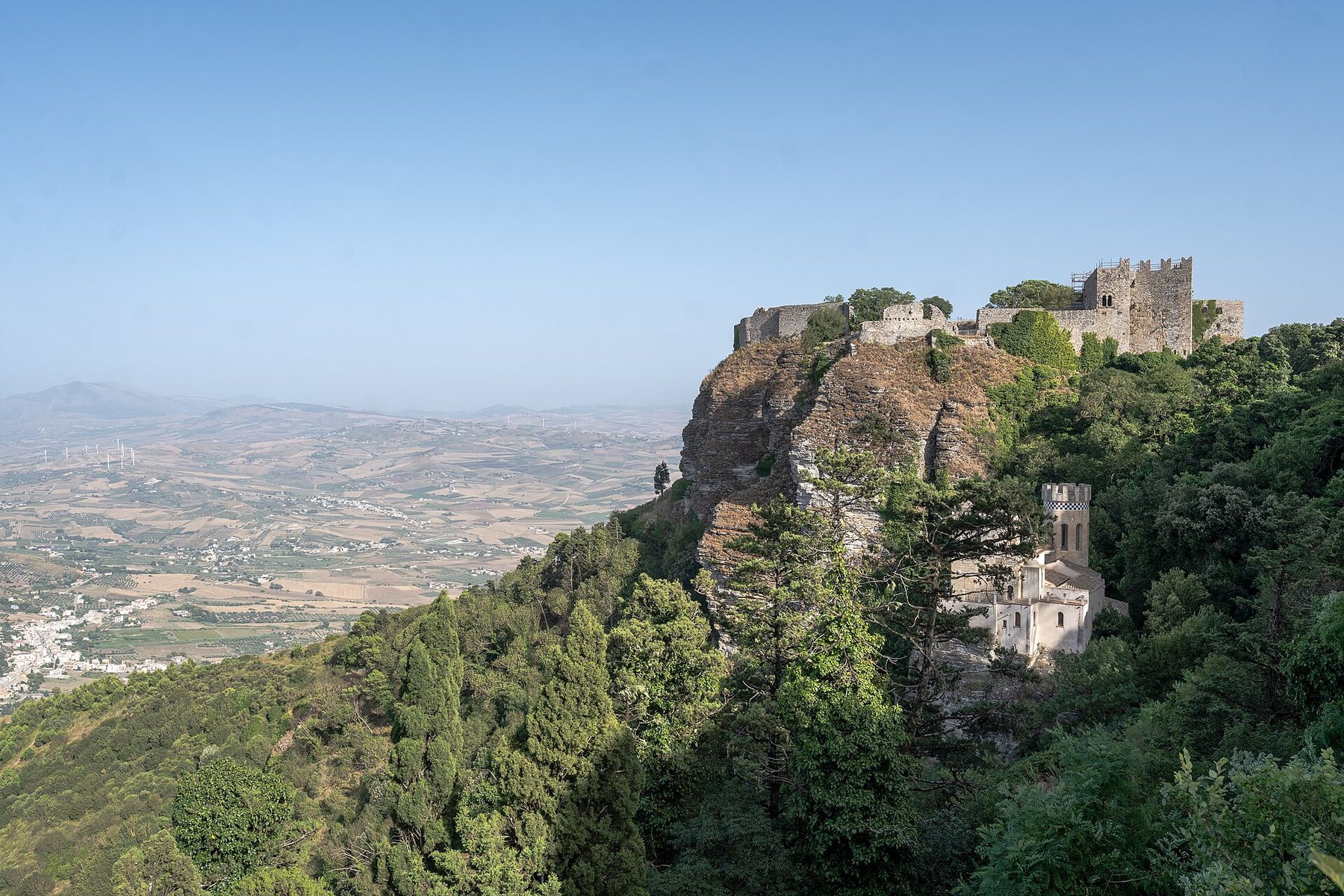
The Norman Castle of Venus rising on its rocky outcrop above the gardens of Erice.

No. 03

Castello di Venere

The most romantic ruin in western Sicily. Built by the Normans in the 12th century on the site — and out of the stones — of the ancient temple of Venus Erycina. Inside the precinct stood the temple's baetylus and a sacred spring; today you can walk the ramparts and look down on the Sicilian patchwork unfolding to the sea.

From the castle, the small church of Santa Maria della Neve sits inside the walls — a Christian footnote to a much older sacred site.

Built: 12th century Where: Eastern summit Ticket: ~€4
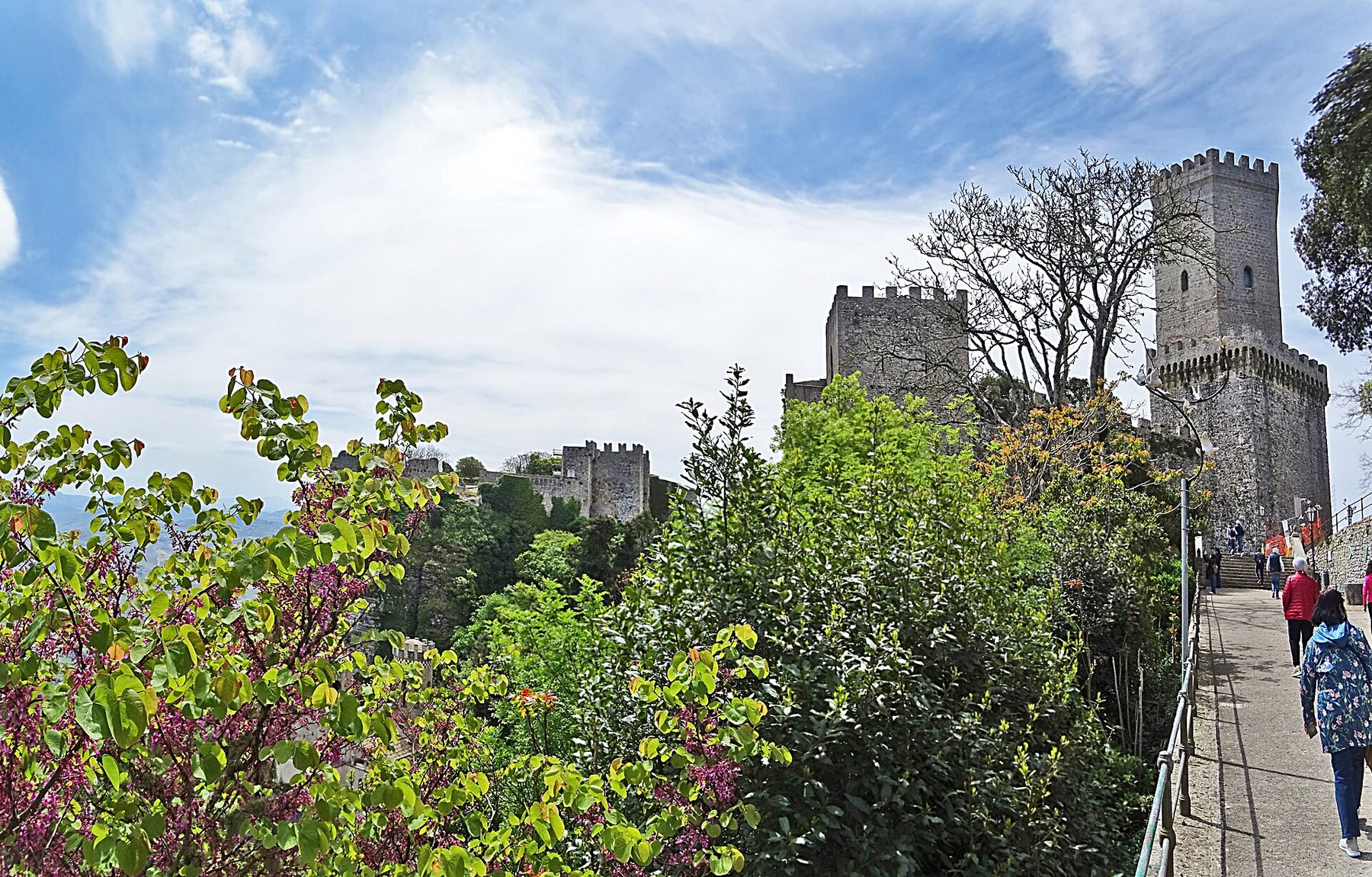
The Castle of Balio and Torretta Pepoli in the gardens beneath the Castello di Venere.

No. 04

Giardino del Balio & Torretta Pepoli

The garden terrace between the town and the castle. It's a 19th-century romantic park — laid out by Count Agostino Pepoli, the local antiquarian who also founded the museum in Trapani — wrapped around the medieval Castle of Balio, the Norman governor's residence.

The Torretta Pepoli at the edge of the garden is now restored as a "Lighthouse of the Mediterranean" — an observatory for peace, an oddly appropriate use for a town that hosts physicists discussing nuclear disarmament.

Era: 19th century Where: Between town and castle Free
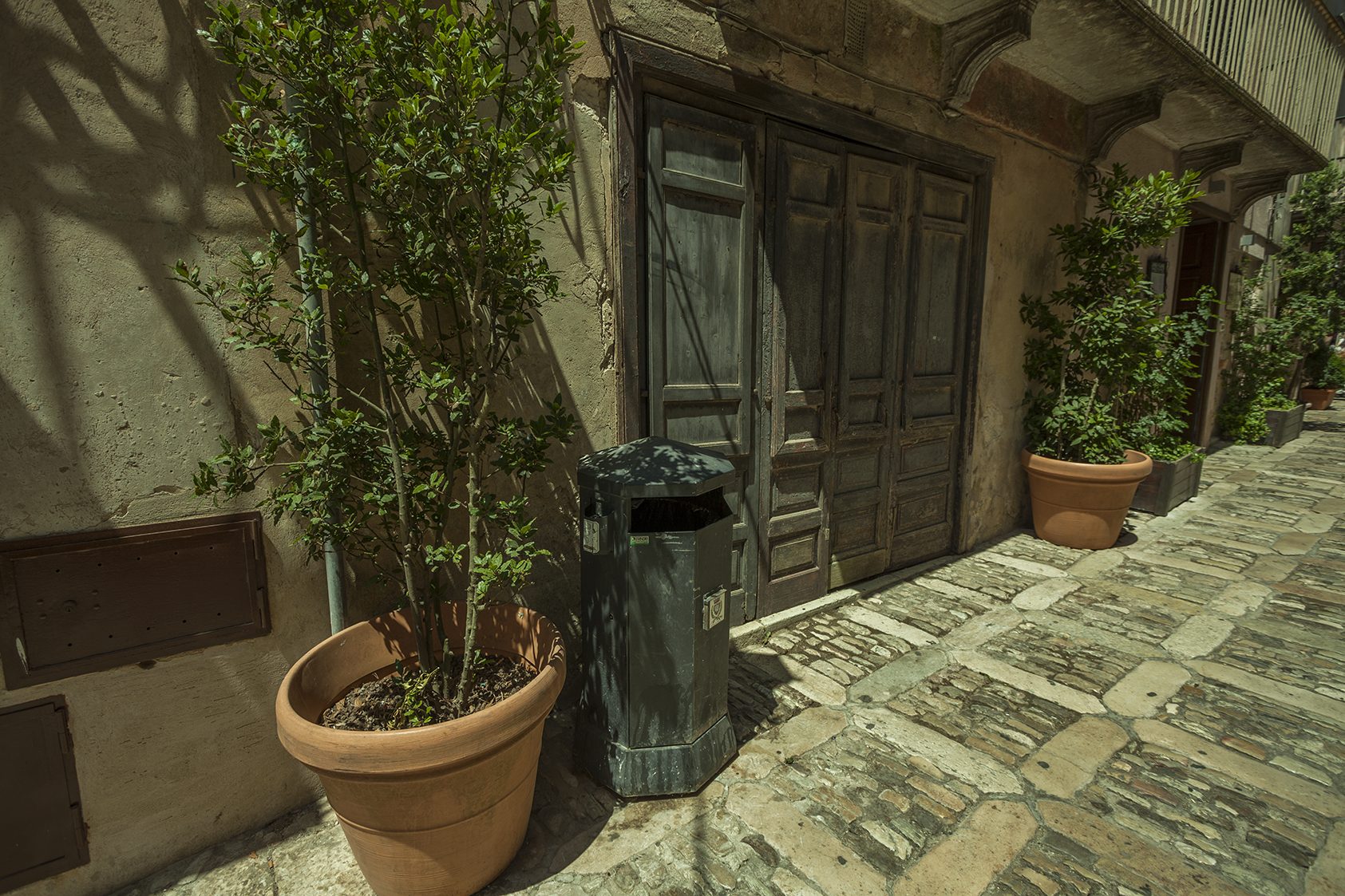
A narrow lane in Erice with a polished stone pavement and a Madonna shrine.

No. 05

The grey stone lanes

Erice's streets are the sight. Polished smooth by centuries of footsteps and laid out in a strict triangular grid, they're paved in irregular flat stones whose joints form Greek-key patterns and small geometric designs. Many doorways open onto inner courtyards — try to glimpse the ones that are open.

The town is famously small. From the main piazza (Piazza Umberto I) you can reach any monument in under ten minutes.

Free Wear: grippy soles Best at: dawn & dusk
Norman castle tower above the gardens and trees of Erice, near the Quartiere Spagnolo.

No. 06

Quartiere Spagnolo

An unfinished fortified quarter on the north-western flank of the town, begun in the 17th century to garrison Spanish troops and never completed. Today it's a low, irregular complex with a panoramic terrace — one of the best places to watch sunset, with views over the Tyrrhenian Sea, Trapani's salt pans, and (on clear days) the Egadi Islands.

Built: 17th century Where: NW corner Best for: sunset
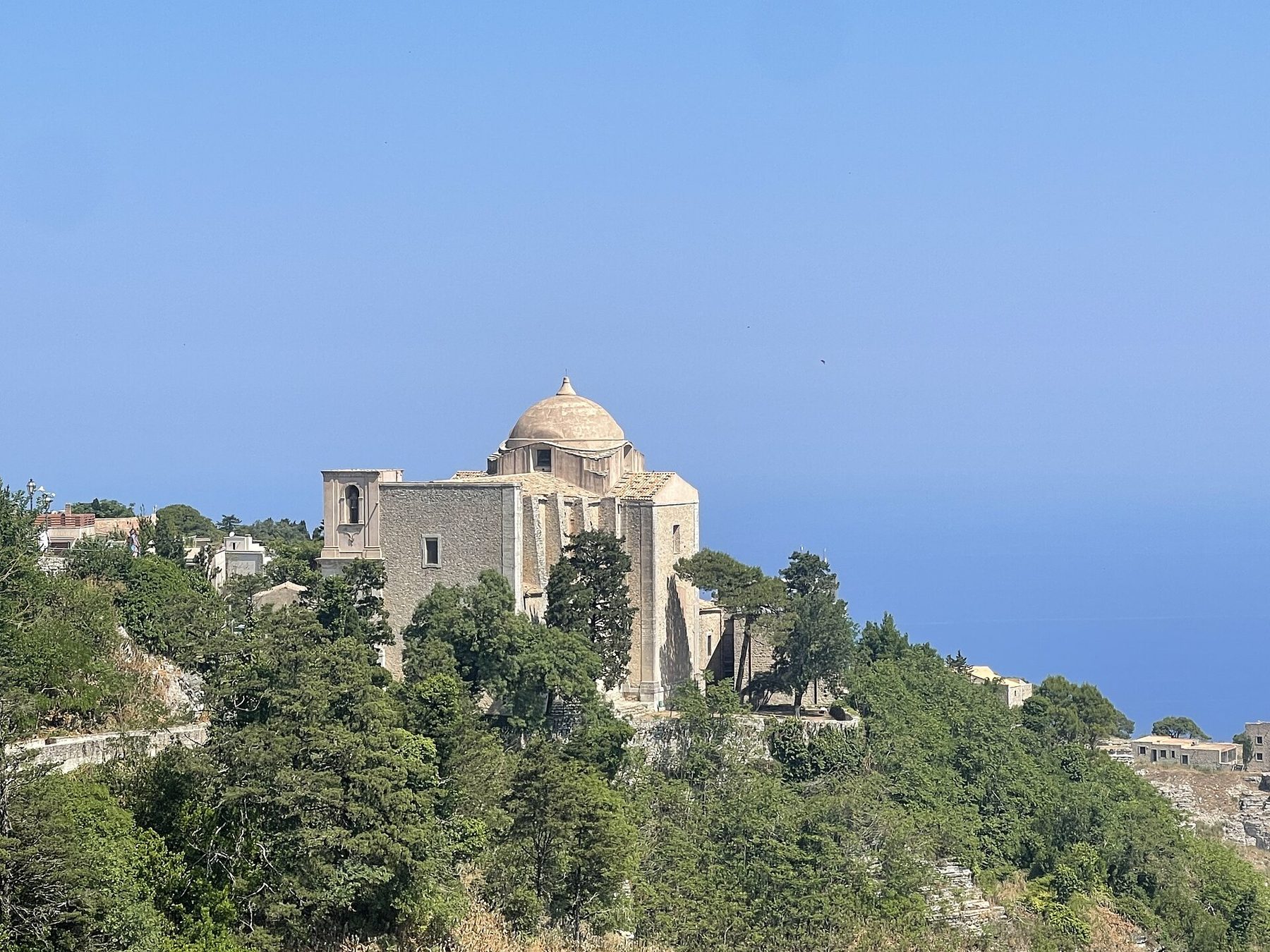
The Church of Saint John the Baptist in Erice, with its small bell tower.

No. 07

San Giovanni Battista & the lesser churches

Erice is sometimes called the city of a hundred churches — there were never quite that many, but more than sixty were built inside the walls. The small Church of San Giovanni Battista, with its 14th-century origins and a distinctive Norman dome, is one of the loveliest of the smaller ones. Nearby, the church of San Martino hides Baroque ceilings worth a look.

Pick up the Erice Card at the tourist office: it gives you access to a handful of the churches and museums in a single ticket.

Era: 14th century Tip: Erice Card ~€6
The luminous interior of the Chiesa Matrice in Erice — typical of the historic interiors used by the Majorana Centre.

No. 08

Ettore Majorana Centre for Scientific Culture

Three restored medieval monasteries — the former Convent of San Domenico, San Francesco, and San Rocco — now form the home of an international school of physics founded in 1963. Feynman, Dirac, and dozens of Nobel laureates have taught here. The Erice Statement on scientific responsibility in the nuclear age was drafted in these cloisters in 1982.

The lecture halls and concert spaces are sometimes open to visitors during cultural festivals — check the Centre's calendar.

Founded: 1963 Open: during events
A wide panoramic view of Erice from above, showing its terracotta roofs and the curve of the Sicilian coast.
Best photo of Erice? From the Giardino del Balio at sunset, looking back toward the Castello di Venere.

Up next

Now you've walked the town, eat.

Almond pastries from a recipe of cloistered nuns. Genovesi still warm. A glass of Marsala on a terrace.

Eat & drink →