The table

Almond, ricotta, and the recipes of nuns.

Erice's cuisine is sweet before it is anything else. For centuries, the cloistered nuns of the town's convents perfected pastries that have outlived them.

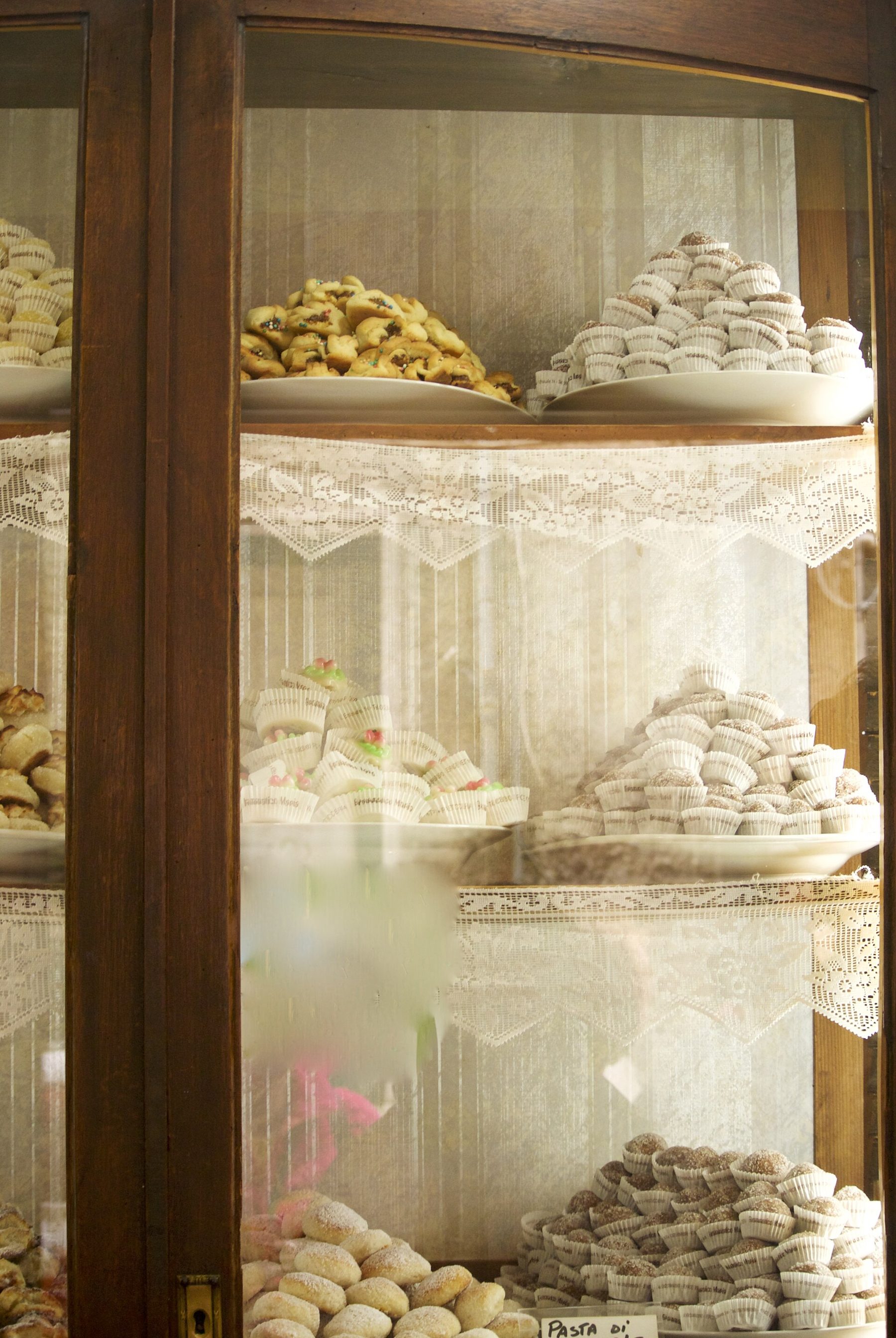
A tray of small almond-paste pastries shaped and coloured to look like fruit.

The institution

Maria Grammatico

Behind a quiet door near Piazza Umberto I sits the pastry shop that put Erice on the culinary map. Maria Grammatico learned her craft as a child in the cloistered orphanage of the San Carlo nuns, the last guardians of recipes the order had perfected over centuries. When the orphanage closed in 1963, she opened her own shop with what she remembered.

Today her almond pastes, marzipan fruits, and warm genovesi are the most famous in Sicily. The book she co-wrote with Mary Taylor Simeti, Bitter Almonds, is still in print. Come hungry. Sit on the terrace. Order a coffee and at least three things.

Pasticceria Maria Grammatico — Via Vittorio Emanuele 14, Erice

What to order

Genovesi genovesi ericini

The signature pastry of Erice — a small shortcrust pocket filled with hot pastry cream (custard) or sometimes ricotta, dusted with powdered sugar. Best eaten warm, standing up, within ten metres of the bakery.

Frutta martorana marzipan fruit

Almond paste sculpted and painted to look exactly like fruit — figs, peaches, prickly pears, lemons. A tradition perfected by the nuns of the Martorana monastery and adopted across western Sicily.

Mustazzoli spice biscuits

Hard, fragrant biscuits made with honey, spices, and (depending on the bakery) wine or fig must. Erice's version is bound up with the town's medieval Christmas traditions.

Belli e brutti "the ugly & the beautiful"

Lumpy almond-meringue cookies — crunchy outside, chewy inside. The name tells you not to judge them by their appearance. Often paired with a glass of Marsala.

Cassatelle di ricotta fried ricotta turnovers

A western Sicilian sweet rather than a strictly Erice one — half-moon fried pastries filled with sweetened ricotta and chocolate chips. Best fresh from a friggitoria.

Pasta con le sarde sardine & fennel pasta

Sicily's defining pasta — bucatini with sardines, wild fennel, pine nuts, raisins, and saffron — and one of the most reliable savoury dishes on Erice menus.

Couscous di pesce fish couscous

From the coast at Trapani, just down the mountain — a steamed couscous served with rich fish broth. A reminder that western Sicily is closer to Tunisia than to Rome.

Marsala & almond liqueur after-dinner

The fortified wine of nearby Marsala pairs naturally with Erice's sweets. So does liquore di mandorla — a smooth, almost milky almond liqueur made all over western Sicily.

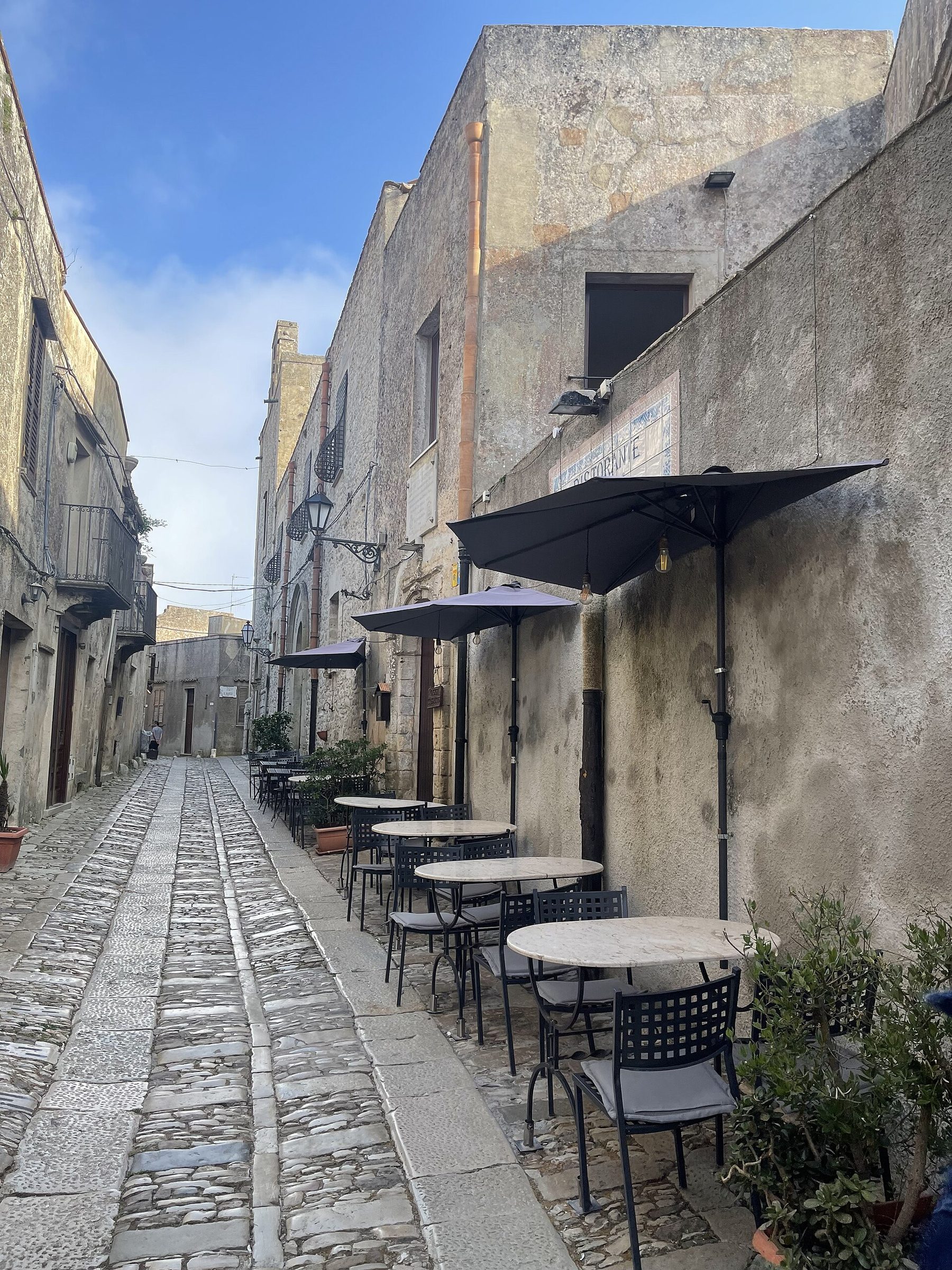
An open restaurant terrace in Erice in the late afternoon light.
An afternoon terrace in the old town — the quieter side of Sicilian hospitality.

Where to sit

A short list of restaurants and cafés

Pasticceria Maria Grammatico

The pastry shop. Sit on the small terrace overlooking Piazza Umberto I. Order the genovesi, a marzipan fruit, and a coffee.

Caffè Maria

An old-school café on Via Vittorio Emanuele where locals stop for a quick espresso and a brioche. Cheaper than the famous places, just as good.

La Pentolaccia

A reliable trattoria in a converted convent, with vaulted ceilings and a courtyard. Try the busiate with pesto trapanese.

Monte San Giuliano

Named for the medieval name of Erice — a slightly more formal restaurant with a quiet inner garden. Good fish couscous and a thoughtful wine list.

Osteria di Venere

A small, family-run osteria with hearty plates and Marsala by the glass. The kind of place you remember the next morning.

Ulisse

A casual rosticceria for arancini, sfincione, and a glass of cold wine at lunchtime — when you don't feel like a sit-down meal.

Restaurants in Erice tend to close between lunch and dinner (roughly 15:00–19:30). Many shut for one weekday and most close earlier than mainland Italy. Reserve for dinner in high season.

Last stop

Now plan the actual trip.

Getting there, when to come, how long to stay, and where to sleep — the practical guide.

Plan your visit →