Few places in the Mediterranean have changed hands as often as Erice, and almost none have kept so much of each hand visible in the stone.
The Elymians and the sanctuary on the mountain
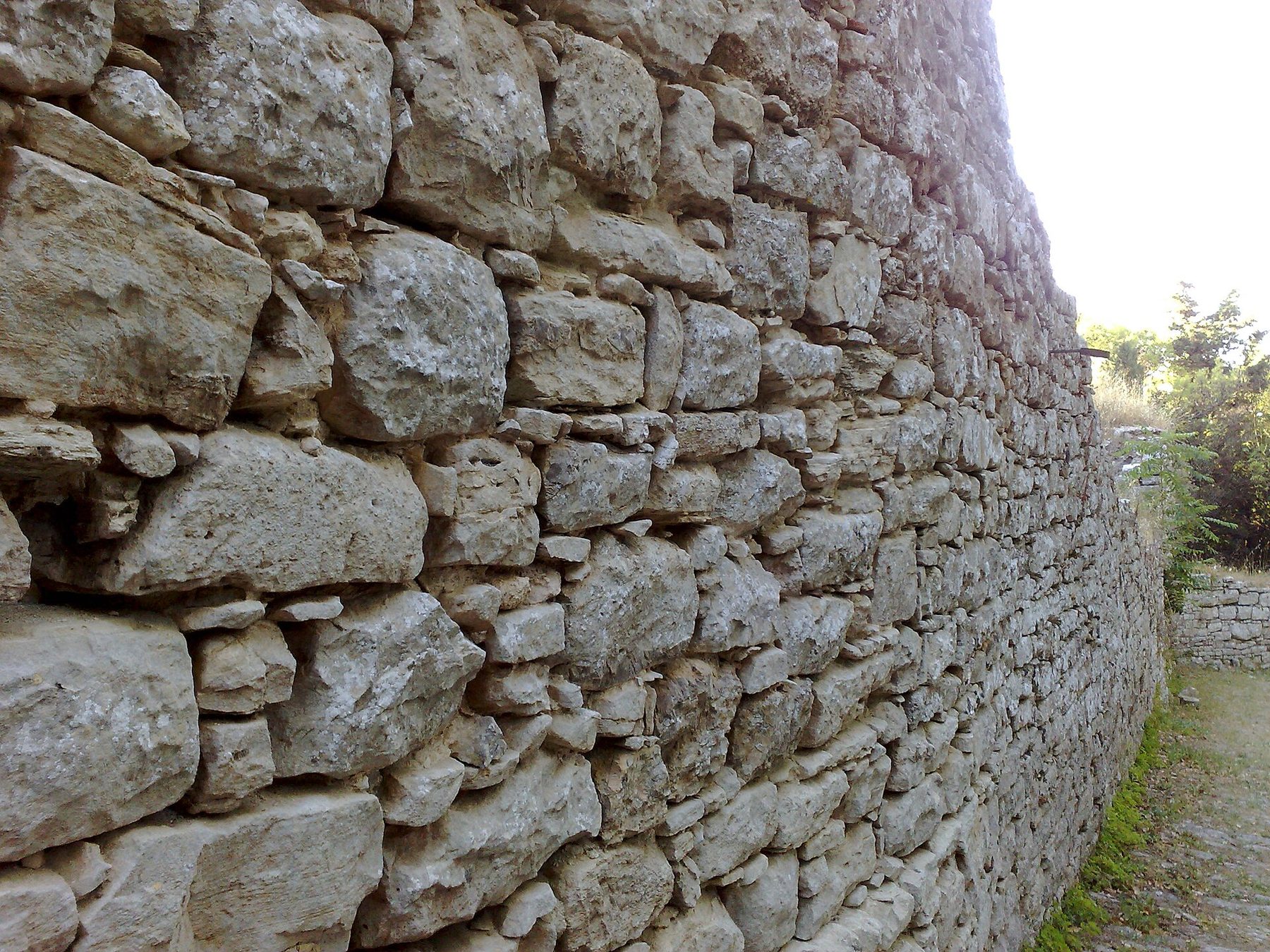
Long before there was a Roman Sicily, before there was even a Greek one, the summit of Monte Eryx belonged to the Elymians, an indigenous people of western Sicily whose origins the ancients themselves could not agree on. The historian Thucydides called them refugees from the fall of Troy. Whatever the truth, by the early first millennium BC they had built a town and a sanctuary at 750 metres above the sea, and they had begun the colossal walls of Cyclopean stone whose lower courses can still be traced along the eastern side of the modern town.
The sanctuary was already famous by the 6th century BC. Dedicated to a goddess of fertility and love, it was identified over the centuries with Astarte (by the Phoenicians), Aphrodite (by the Greeks), and finally Venus Erycina (by the Romans). Sailors from across the Mediterranean stopped to make offerings. Ancient writers reported that the altar of the temple was the largest in existence.
The temple stood on the summit of Monte Erice, 750 metres above the Tyrrhenian Sea, and was visible from a great distance.
Empires take their turns
When the Phoenicians arrived from Carthage, they made Eryx one of the three centres of Punic Sicily, alongside Motya and Panormus, and reinforced the Elymian walls with a Phoenician layer (the section of fortification known today as the Mura Elimo-Puniche dates from this period). Then came the Greeks of Segesta, then the First Punic War, which left the mountain devastated and the town partly burnt by Hamilcar Barca in 244 BC as he retreated to Rome.
Under Rome, the sanctuary of Venus Erycina was given imperial patronage: a temple to the same goddess was built on the Capitoline Hill in Rome itself, modelled on Eryx. Then came the centuries of fading. The Arabs renamed the town Gebel-Hamed, and rebuilt parts of it during the Emirate of Sicily.
The Normans build a castle on a temple
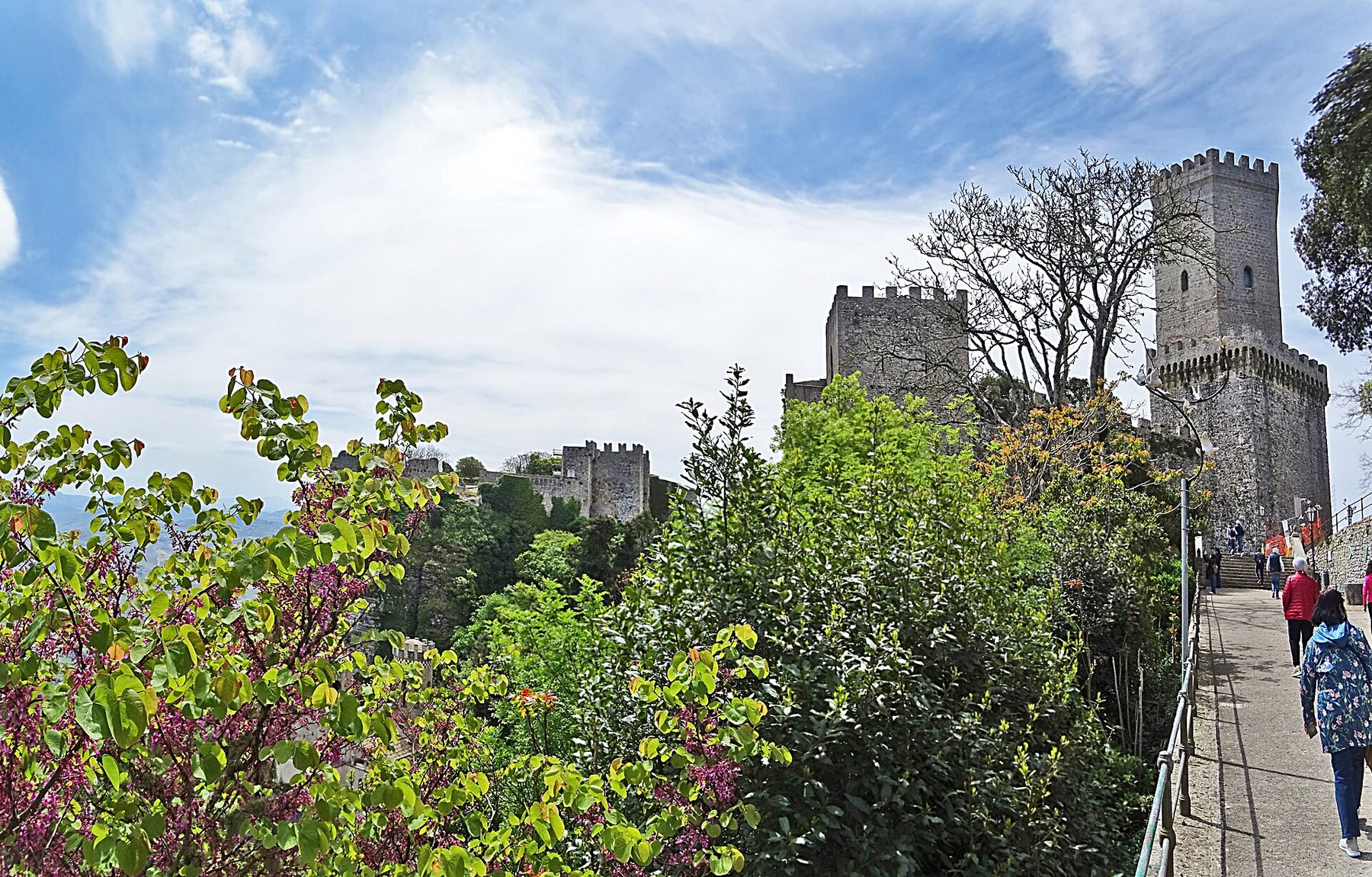
In 1167, Roger II of Sicily granted the town to a community of Norman knights, who renamed it Monte San Giuliano, a name it would keep until 1934, when Mussolini restored the ancient Erice. Over the temple of Venus, the Normans built a castle; over the older churches, they built newer ones, in the Sicilian Gothic style that mixes Romanesque solidity with Arab and Byzantine ornament.
The Chiesa Matrice, Erice's mother church, was begun in the early 14th century under Frederick III of Aragon, who used stones from the dismantled temple to build it. Its freestanding bell tower, 28 metres high, sits on the base of a Punic watchtower that may date to the time of the wars with Carthage.
A town of churches, and then a town of science
By the late Middle Ages, Erice had become known as la città dalle cento chiese, the city of a hundred churches. There were never quite a hundred, but more than sixty were built in a town less than a kilometre across, many founded by religious orders who chose the cool summer air of the summit for their cloisters. Many fell into disrepair after the religious orders were suppressed in the 19th century; today around a dozen are still in regular use.
In 1963, three of those old monasteries were repurposed by the Italian physicist Antonino Zichichi as the home of a new Ettore Majorana Centre for Scientific Culture, an international school where Cold War physicists came together to talk about nuclear weapons, peace, and the boundary between knowledge and ethics. Erice has since hosted Feynman, Dirac, Kapitsa, and dozens of Nobel laureates. In 1982, Paul Dirac, Pyotr Kapitsa, and Zichichi drafted the Erice Statement here, on the responsibility of scientists in the nuclear age.
A short timeline
c. 12th–6th century BC
The Elymian sanctuary
Indigenous Elymians establish Eryx and a sanctuary to a goddess of love and fertility on the summit. The Cyclopean walls are begun.
5th–3rd century BC
Phoenicians and Greeks
Carthage incorporates Eryx into Punic Sicily, reinforcing the walls. Greek influence grows; the sanctuary becomes pan-Mediterranean.
244 BC
The First Punic War
Hamilcar Barca burns much of the town before retreating. Rome takes over and elevates the temple of Venus Erycina to imperial status.
831–1077
Arab rule
Under the Emirate of Sicily, the town is renamed Gebel-Hamed. Streets are rebuilt; agriculture flourishes on the slopes below.
1167
The Normans arrive
Roger II grants the town to Norman knights. The Castello di Venere is built over the ruins of the temple, reusing its stones.
14th century
The Chiesa Matrice
Frederick III of Aragon commissions Erice's mother church and its bell tower. The town fills with monasteries and churches.
1934
The name returns
After eight centuries as Monte San Giuliano, the ancient name Erice is restored under the Italian government.
1963 – today
A second life as a city of science
The Ettore Majorana Centre transforms three medieval monasteries into a world-class international scientific institution. Erice becomes, alongside its medieval identity, a "city of science and peace".
What's remarkable is how legible all of this is when you walk Erice today. A Phoenician course of stone sits beneath a Norman tower; a Gothic doorway opens onto a Baroque altar; a monastery built for cloistered nuns now hosts a lecture on cosmology. The town is, in the most literal sense, built on what came before.
Where to start → the Castello di Venere for the temple-on-castle story, the Mura Elimo-Puniche for the Elymian walls, the Chiesa Matrice for the Gothic, and the Ettore Majorana Centre for the new chapter.